 I am sitting here in a doctor’s office with time to kill and no broadband. I spent a half hour on Google Reader on my Android Phone and now I’m seeing things blurry from straining my eyes too long. Wouldn’t it have been great if I had the iPad with a 3G connection?
Not really. I had my MacBook with me, so what I really needed is a 3G connection not a third device. And 3G connections costs money which I can’t justify based upon the amount I would use it with my laptop (only occasionally). I already have a $100 bill for my cellphone out of which probably $40 can be attributed to the data connection.
For me, and I suspect for a lot of people, the iPad is going to come down to how they answer these questions:
– Of the three devices – smart phone, laptop and tablet – do I need all three or will two do? I can see some people saying I need to stay with my company’s Windows laptop but I’d really love to have something from Apple for browsing, entertainment and light work, which is most of what I do at home. iPad could be it for those people.
– But for most people just three devices will be too many. If two will do, what are those two devices? My guess is the iPad is not going to find a place in the top two, too often.
– How many 3G connections can I afford and which devices should have them?
On the second point, Apple can’t do much. It also doesn’t need to since it practically owns the smart phone category and has a growing MacBook franchise.
But the cost of 3G plans is a big hurdle for the iPad. And with its clout with mobile operators, it can do something about it.
I think that it’s safe to say that without a 3G connection, the iPad is much less useful. It then becomes more of a bulky iPod – a gaming and entertainment device that you can’t put in your pocket – than a constant companion that saves you from squinting at your smartphone screen while waiting in doctors’ offices.
But if every 3G connection is going to cost me $30 to $60 extra, I don’t think it works, at least for my MCIM (middle-class Indian mentality).
But it doesn’t have to be that way. Why can’t I get a 3G plan that is just variable – it bills me by the MB across all devices I use?
Now that’s a plan that would make it easier for me to go for the iPad. I’d probably still wait for the price to come down and the specs to go up, which will happen in a year for sure.
Update: But maybe the iPad is actually a Kindle replacement, except that it can turn many tricks that the Kindle can’t. Really? A backlit screen for reading books? Not for me, though. And someone who agrees with me.
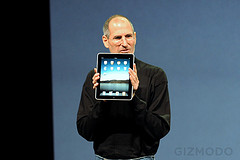
Photo Matt Buchanan

 The last time I took a flight somewhere with my newly acquired Kindle, I was posed with this dilemma – should I turn my Kindle off during takeoff and landing? Or should I pretend that I was just reading a book that looked a little different?
 I got a Kindle recently and have so far enjoyed it. In almost every respect it beats the experience of reading the dead tree version. It is light and portable. I read non-fiction more than fiction and I hate lugging around the heavy hard cover. Turning pages (no paper cuts!) and bookmarking are both better. It seems to be perfectly designed to be read while working out on an elliptical. Font size control is a boon for those of us over 40. If you want a new book, buying it and downloading it wirelessly is dangerously simple and quick. I foresee bigger contributions to the Amazon.com empire from the Pradhan family.
 I have been a user of the Grand Central service for a long time, but I didn’t switch over completely until Google relaunched the service as Google Voice. Google acquired Grand Central a couple of years back after which there was nothing but silence for a while. When they relaunched in March, the new service had a couple of nifty features, but what tipped it over for me was that the relaunch indicated that Google was firmly committed to the future of Google Voice. After all, you don’t want to go handing out a new phone number to people and then have to change it again if the service was discontinued.
 6 am pacific